Who Is This Child Becoming—and Who Might They Already Be?
Aug 06, 2026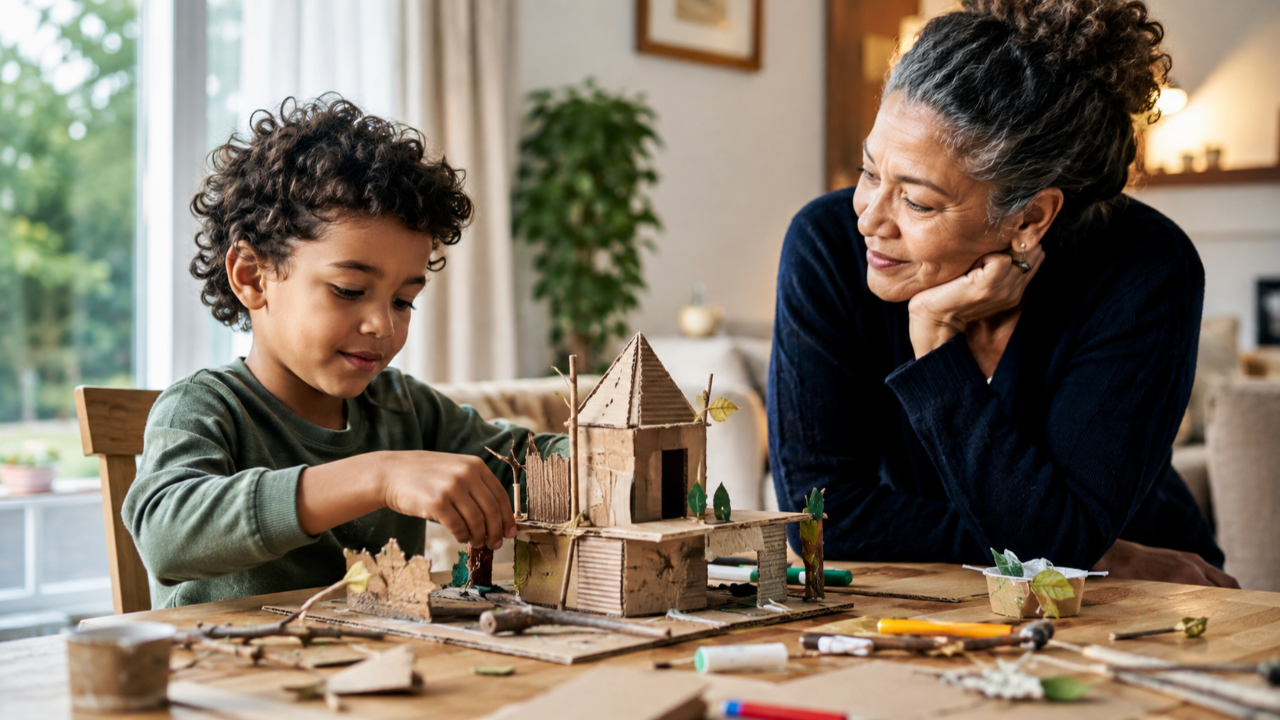
Who Is This Child Becoming—and Who Might They Already Be?
A Gentle Invitation for Parents and Caregivers of Young Children
By William E. Carpenter
Children arrive with personalities all their own.
Some enter a room as though they have been invited to lead it. Others remain quietly at the edge, watching before deciding where they belong. Some ask a hundred questions before breakfast. Others communicate through movement, imagination, humor, art, silence, or an unexpectedly serious observation that leaves an adult wondering, “Where did that come from?”
Parents and caregivers receive plenty of advice about what children should learn, how they should behave, and when they should reach certain milestones. Much less attention is given to a different question:
Who is this child already showing us they are?
Before we hurry to teach, correct, compare, or explain, we can pause and observe.
-
What captures this child’s attention when no one is directing them?
-
How do they respond when another child is hurt?
-
What happens when their plans suddenly change?
-
Do they need time alone after being around other people?
-
When do they appear most peaceful, engaged, or fully alive?
-
Are they naturally adventurous, cautious, humorous, sensitive, persistent, imaginative, orderly, affectionate, or intensely curious?
None of these qualities defines the whole child. They are clues—small windows into a developing inner world.
Observe Before We Label
A child who appears stubborn may be persistent.
A child who seems shy may be carefully reading the room.
A child who asks endless questions may be developing a powerful capacity for inquiry.
A child who becomes distressed by noise, conflict, or hurried transitions may experience the world with unusual sensitivity.
A child who constantly takes things apart may not be destructive. They may be trying to understand how things fit together.
Labels close a conversation. Curiosity opens one.
Instead of asking, “Why is this child being difficult?” we might ask:
-
What is this child experiencing?
-
What need may be underneath this behavior?
-
What are they trying to communicate?
-
What strength might be hidden inside this challenge?
-
What support would help them respond differently?
-
What might I be overlooking because I have already named the behavior?
These questions do not mean that children should live without boundaries. Children need safety, consistency, guidance, responsibility, and loving limits.
Understanding does not eliminate correction. It helps us make correction more thoughtful and effective.
Listen to the Child Beneath the Words
Young children do not always have the language to explain what is happening within them.
They may communicate through play. They may repeat the same story using different toys. They may draw pictures that reveal concerns they cannot yet name. They may become unusually quiet, energetic, controlling, silly, clingy, angry, or emotional.
Behavior can communicate, but it is not always a simple code adults can immediately decipher. Hunger, fatigue, sensory overload, frustration, fear, developmental differences, physical discomfort, and ordinary experimentation can all affect behavior.
Parents do not need to analyze every movement. We are not trying to turn childhood into a research project.
We are simply learning to notice.
Try sitting nearby while your child plays without directing the activity. Listen to the voices they give their characters. Notice who solves the problems, who needs rescuing, who becomes angry, and how the story ends.
Observe how your child interacts with siblings, friends, animals, older adults, and unfamiliar people.
Notice what helps them settle after disappointment. Watch what happens when they are given time, choice, encouragement, or a clear boundary.
These moments can help us understand how a child experiences safety, connection, fairness, choice, responsibility, and love.
What Children Bring With Them
Parents often say:
-
“She has been that way since the day she was born.”
-
“He seems like an old soul.”
-
“No one taught her to notice those things.”
-
“He has always been unusually sensitive.”
-
“She talks about places we have never visited.”
Children do enter life with meaningful individual differences. Temperament, biology, genetics, prenatal conditions, early relationships, family patterns, culture, environment, and experience can all influence development. No single factor explains the whole child.
Some spiritual traditions also suggest that children may carry experiences or tendencies from before birth. These beliefs are not established scientific conclusions, and families do not need to agree about them. They can be held as possibilities for reflection, without presenting them to a child as proven facts.
We do not have to force one explanation or resolve every mystery.
We can remain open to wonder while staying grounded in careful observation.
The most useful question may not be, “Can I prove where this quality came from?”
It may be:
What is this quality asking me to notice, understand, and lovingly cultivate?
A deeply compassionate child may benefit from opportunities to care for animals, plants, younger children, or family members.
A child fascinated by tools and structures may thrive while building, sorting, repairing, designing, or discovering how things work.
A child who senses tension before anyone speaks may need help recognizing sensitivity as a capacity while also learning that they are not responsible for carrying everyone else’s feelings.
A child with a powerful imagination may need freedom to create along with gentle help distinguishing imagination, fear, possibility, and fact.
A child who wants to lead may need opportunities to develop responsibility, listening, cooperation, and humility—not merely instructions to become less forceful.
The purpose is not to design a future identity for the child. It is to recognize emerging capacities and create conditions in which they can mature wisely.
Adults as Gardeners
Children are not empty containers waiting to be filled.
They are more like living gardens.
Every garden has its own conditions, rhythms, needs, strengths, and possibilities. Parents and caregivers contribute safety, language, encouragement, boundaries, experiences, examples, and love.
We cannot force a seed to become a particular flower.
We can learn what helps it grow.
This suggests a meaningful shift:
From managing a child’s behavior to cultivating a child’s capacities.
We can help children learn to:
-
Pause before reacting
-
Observe what is happening
-
Recognize and name feelings
-
Ask thoughtful questions
-
Listen to other perspectives
-
Imagine alternatives
-
Consider consequences
-
Learn from mistakes
-
Make repairs
-
Choose more thoughtfully
These capacities do not need to be taught as formal lessons. They can develop through ordinary family life:
-
Talking during breakfast
-
Wondering together in the car
-
Pausing during a disagreement
-
Telling stories
-
Drawing and building
-
Exploring nature
-
Asking what a character in a book might be feeling
-
Discussing what happened after a difficult moment
-
Reflecting at bedtime on what helped that day
Children learn from what adults explain. They also learn from how adults listen, apologize, establish boundaries, respond to mistakes, handle disagreement, and revise their own conclusions.
We teach through what we say and through how we live.
Equality of Worth and Clarity of Role
Children and adults are equal in worth, but they do not carry identical roles or responsibilities.
Adults are responsible for safety, structure, protection, limits, and age-appropriate guidance. Children need room to express themselves, but they should not be expected to make decisions beyond their developmental capacity or carry adult emotional burdens.
Respecting a child’s inner life does not mean giving the child control over every situation. It means exercising adult authority in a way that preserves dignity.
A boundary can be firm without being humiliating.
You can address a mistake without turning it into a judgment about the child’s worth.
Responsibility can be taught without shame.
The healthiest guidance combines curiosity with leadership, compassion with structure, and equality of worth with clarity of role.
When Additional Support May Be Needed
Attentive observation is valuable, but not every concern can or should be addressed through family reflection alone.
Consider consulting a qualified pediatric, developmental, educational, or mental-health professional when behavior is persistent, intense, rapidly changing, causing significant distress, interfering with daily life, or raising concerns about safety, learning, communication, sleep, eating, physical health, or development.
Seeking professional guidance is not a failure of parenting. It is one way adults protect a child’s well-being.
Observation helps us ask better questions. Qualified assessment can help us understand concerns that require specialized knowledge.
A Simple Practice for This Week
Choose ten quiet minutes while your child plays, draws, builds, reads, or interacts with someone else.
For those ten minutes:
-
Do not teach.
-
Do not correct.
-
Do not direct.
-
Simply observe with warmth and curiosity.
Afterward, write down three things:
-
What seemed to bring this child alive?
-
What strength, concern, or sensitivity did I notice?
-
What question might help me understand them more deeply?
Then, at a natural moment, ask one gentle question:
“What do you wish grown-ups understood about you?”
Do not rush to answer, explain, correct, or turn the response into a lesson.
Listen.
The answer may be playful, surprising, confusing, brief, or profound. Whatever the child says, you have created something valuable: a moment when they feel seen and taken seriously.
The Beginning of a Different Kind of Learning
Helping children grow does not begin with having all the answers.
It begins with attention.
With wonder.
With listening.
With the willingness to see behavior as communication and personality as possibility.
Your child is learning how to live in this world. At the same time, your child may be inviting you to see the world differently.
That is part of the gift—and responsibility—of caring for children.
We guide them.
We cultivate conditions in which they can flourish.
We establish limits that protect their learning.
We help them develop the inner capacities they will need throughout life.
And if we remain open, they remind us to continue learning and growing too.
Continue Exploring Together
Our children’s stories help families practice curiosity, thoughtful questions, emotional steadiness, clearer thinking, and learning through everyday experiences.
Copyright and Intellectual Property
Copyright © 2026 William E. Carpenter. Published by ACIM Global Coach, LLC. All rights reserved.
This essay—including its original text, questions, examples, educational structure, selection, coordination, and expression—is the intellectual property of William E. Carpenter and ACIM Global Coach, LLC. It may not be reproduced, distributed, adapted, republished, or used to create commercial derivative works without prior written permission, except for brief quotations with proper attribution as permitted by law.
For permissions, contact [email protected] or visit ACIMGlobalCoach.com.
Educational Note
This article is intended for education, reflection, and family conversation. It is not medical, psychological, developmental, therapeutic, educational-assessment, or legal advice, and it is not a substitute for individualized guidance from a qualified professional.
William E. Carpenter writes as an educator, author, coach, parent, and grandfather—not as a pediatrician, psychologist, or licensed mental-health professional. Spiritual and philosophical ideas are offered as possibilities for personal consideration, not as established scientific or clinical conclusions.
If you have concerns about a child’s health, development, safety, learning, or emotional well-being, consult an appropriately qualified professional.
